
NFPA 96 Cleaning Requirements for Arizona Commercial Kitchens
What the standard requires, how often your system has to be cleaned, who actually decides whether you pass, and what paperwork you should have on file. Written for operators and facility managers in the Phoenix East Valley.
Introduction to NFPA 96
What NFPA 96 Is — and Who Actually Enforces It
NFPA 96 is the national standard covering ventilation and fire protection for commercial cooking operations. It’s published by the National Fire Protection Association and it defines how kitchen exhaust systems should be built, maintained, inspected, and cleaned.
The standard itself isn’t law. It becomes enforceable when a state, county, or city adopts it into their fire code — which Arizona jurisdictions have. In practice that means the requirements come from NFPA 96, but the enforcement comes from your local fire authority.
That’s an important distinction, because the person who decides whether your kitchen passes is not a national body and not your cleaning vendor. It’s your authority having jurisdiction — the AHJ. In the East Valley that’s typically your city fire department: Mesa, Chandler, Gilbert, Tempe, Scottsdale, or Queen Creek. Health departments and insurance carriers may also ask to see your cleaning records, and they don’t always want the same things.
The practical takeaway: know which categories your kitchen falls into, clean on that interval, and keep records that satisfy whoever asks.
How Often Your System Has to Be Cleaned
NFPA 96 doesn’t set one interval for every kitchen. It sorts cooking operations into categories based on how much grease-laden vapor they produce, and assigns an inspection frequency to each. More grease means more frequent attention.
The four categories, in plain terms:
Solid fuel cooking — inspected monthly
Wood-fired or charcoal-fired equipment. Solid fuel produces both heavy grease and airborne combustible particulate, which is why it gets the shortest interval in the standard.
High-volume cooking — inspected quarterly
Operations running around the clock, or doing significant charbroiling or wok cooking. Twenty-four-hour kitchens, high-throughput restaurants, and busy institutional lines usually land here.
Moderate-volume cooking — inspected semi-annually
The most common category. Standard full-service restaurant kitchens, most hotel and hospital kitchens, and most school cafeterias operating on a normal daily schedule.
Low-volume cooking — inspected annually
Kitchens that run occasionally or produce little grease. Churches, seasonal operations, day camps, and senior centers are typical examples.
Two things worth understanding about these intervals. First, they’re inspection frequencies — the requirement is that the system be inspected on that schedule and cleaned when grease is found, which in an active kitchen usually means cleaning at the same interval. Second, they’re minimums. If your system builds grease faster than the category suggests, the interval that matters is the one your system actually needs, not the one on the chart.
How to Tell Which Category You’re In
Most operators land in the moderate-volume category. The ones who get surprised are usually the ones who moved up a category without noticing.
You’re likely higher than you think if:
- You added a charbroiler, wok range, or solid-fuel equipment since your last cleaning schedule was set
- Your volume increased substantially — a new contract, expanded hours, a busier season that became the norm
- You run more than one shift, or the kitchen is in use significantly longer each day than when the schedule was established
Signs your current interval isn’t working, regardless of category:
- Visible grease on the filters within weeks of a cleaning
- Dark residue where the hood meets the duct
- The exhaust fan running louder or vibrating
- Smoke lingering on the line when you’re busy
- Any grease you can see past the filters, in the duct itself
If more than one of those is true, the interval is wrong for the kitchen you’re actually running now — not the one you were running when the schedule was set.
The Documentation You Should Have on File
Cleaning the system is half of it. Being able to prove it is the other half, and it’s the half most operators discover they’re missing at the worst possible moment.
After every service, you should have:
- The date of service and the name of the company that performed it
- A written scope stating what was cleaned and what condition it was in
- Dated photographs of each access point, before and after
- Any areas not cleaned, identified, with the reason
- A recommended next service date based on your category and what was actually found
- A current certificate of insurance from the vendor
Keep it where someone other than you can find it. The scenario that costs operators is not a dirty system — it’s a clean system, an inspector asking when it was last serviced, and no one on the property able to produce an answer.
What we provide. Every Southwest Commercial Hood Cleaning job ends with a written service report covering all of the above, with before-and-after photos of each access point. We carry $6,000,000 in general liability coverage and will send the certificate before we arrive, with an additional-insured endorsement available on request — most facilities departments need that on file before a vendor is allowed on site.
What a Proper Cleaning Actually Includes
The standard’s language is that the system be cleaned to bare metal. Not degreased, not wiped down — cleaned to bare metal, across the entire system. That means all of the following:
- The hood and canopy, including the interior surfaces behind the filters
- The filters, cleaned or replaced
- The full horizontal and vertical duct run, through every access panel from the hood to the roof
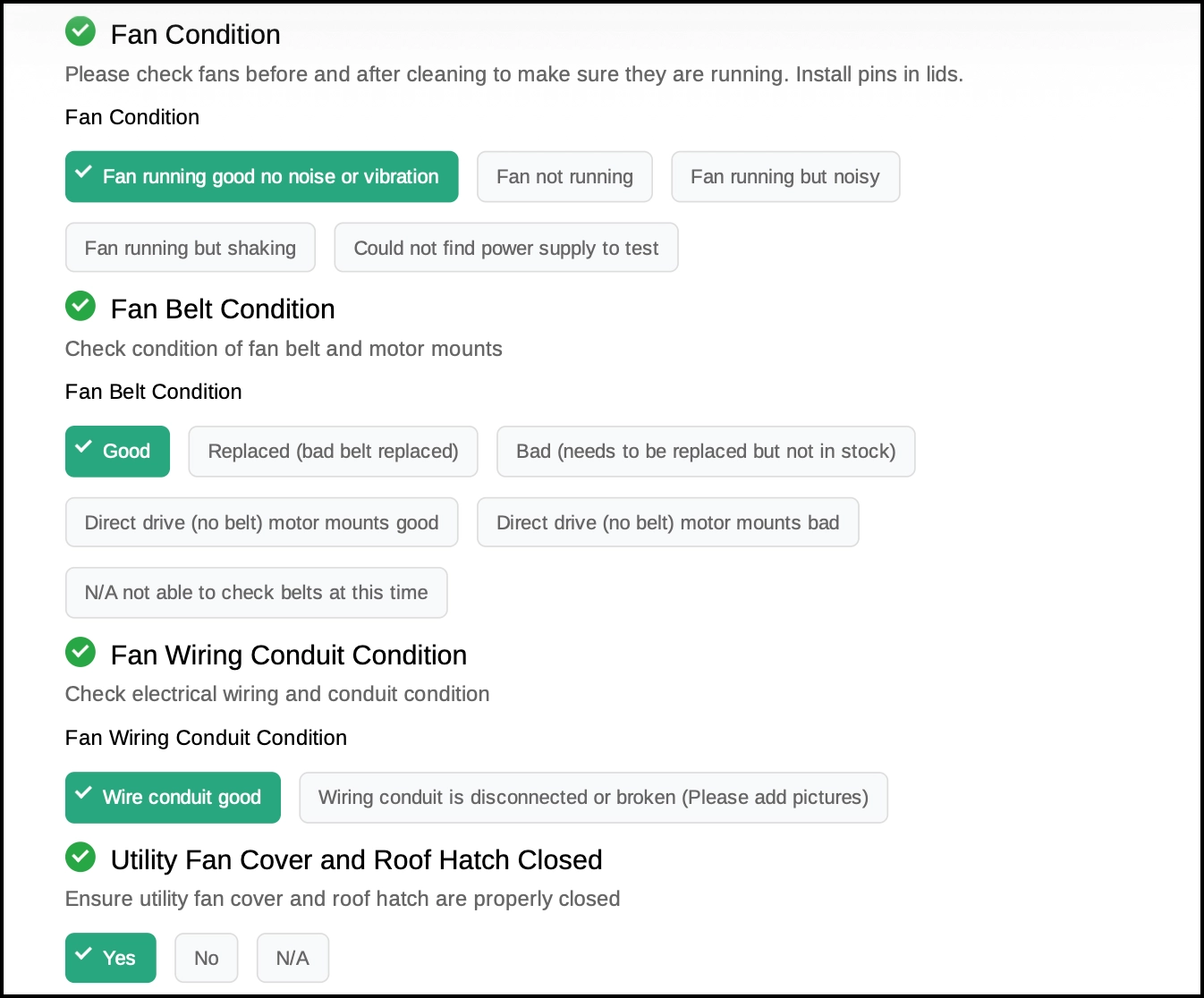
- The exhaust fan — housing, blades, and the base it sits on
- The rooftop area around the fan, where grease accumulates and becomes both a fire and a drainage problem
The step most often skipped is the duct run. Cleaning what’s visible from inside the kitchen is fast and it looks finished from where the operator is standing. It also leaves the part of the system that actually carries fire untouched. If your last service didn’t involve someone accessing the duct through the panels and going up to the roof, the system wasn’t cleaned to the standard.
If a section genuinely can’t be reached — no access panel, an obstructed run, a design problem in the original install — that’s not a failure, but it does have to be documented. An inspector finding an uncleaned section you didn’t know about is a very different conversation than an inspector reading a note about it in your service record.
Why Kitchens Fail
Most failed inspections don’t come from a system nobody ever cleaned. They come from a system that was cleaned, but incompletely, or on the wrong interval, or without anyone writing it down.
The recurring causes:
- Grease in the duct on a system where only the hood was serviced
- The wrong interval — a kitchen that changed what it cooks but not how often it’s cleaned
- No access panels, or panels that were sealed shut in a prior renovation, leaving sections that have never been cleaned
- The rooftop fan left out of scope, with grease pooling in the housing and on the roof surface
- No records — the system is fine, but nothing on file proves when it was last serviced or by whom
Every one of these is preventable, and all of them are cheaper to address on a scheduled visit than during a re-inspection.
Request a Proposal (RFP)
"*" indicates required fields
We’ll do a walkthrough of your full exhaust system: what condition it’s in, which cleaning interval it actually needs, and what documentation you’re missing. No cost and no obligation. Free, one location or twenty. 24-hour turnaround.